R. James Healy graduated from the National Centre for Computer Animation (UK). As a visual effects artist he’s contributed to a wide range of productions, including commercials, music videos, and feature films. As a CG and VFX supervisor, his work has been recognized with a D&AD Pencil and a British Animation Award.
Healy’s short films have been featured in publications such as Creative Review and Stash. They have screened at international festivals, including SIGGRAPH, OneDotZero, and Prix Ars Electronica. His music video for Clark (Warp Records) won the inaugural Radar Festival.
Healy’s visual arts practice explores perception, encompassing both the act of seeing and the construction of meaning. His works combine the use of technology with traditional craftsmanship. Drawing on his experience in visual effects, they often feature kinetic, sequential and algorithmic elements.
During his residency at the CFPR, Healy developed a 3D-printed sequential sculpture. Titled, 20 GOTO 10, the artwork comprises five pieces that form a seamless loop. Viewed in the round, it explores the cyclical experience of time.
3D Prints

20 GOTO 10
2024
3D-printed plastic, stainless steel, birch plywood
152 x 15 x 33cm / 60 x 6 x 13 in
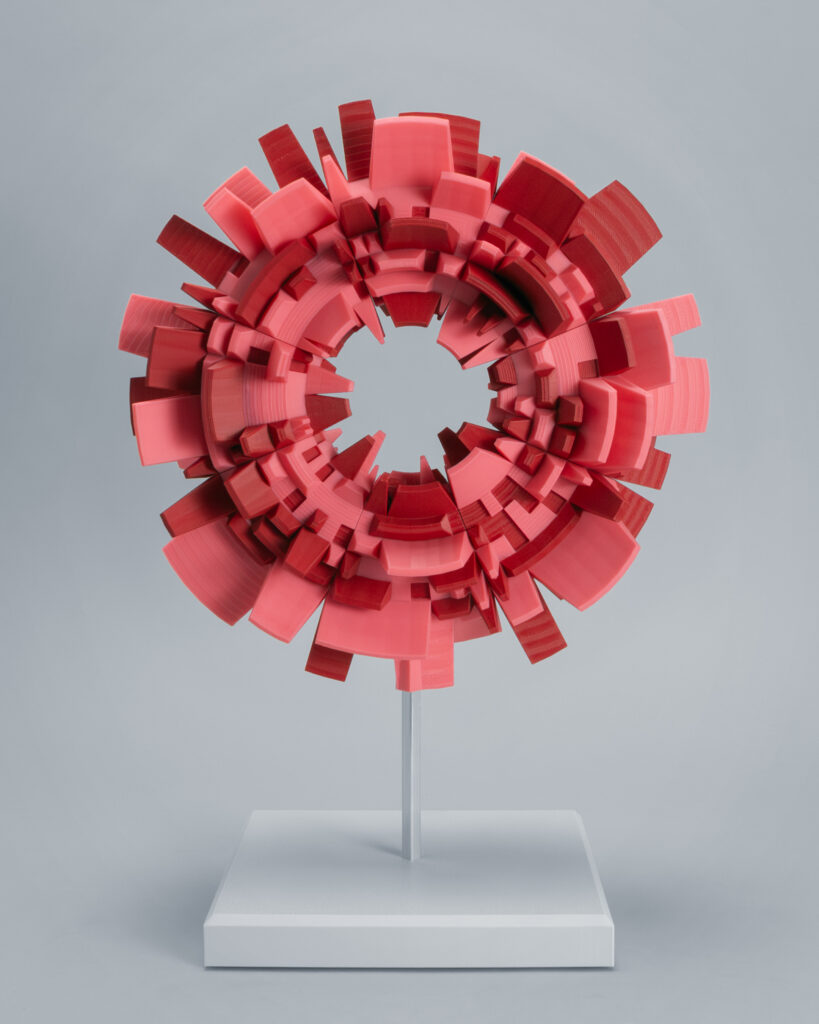
20 GOTO 10 REM 8-BIT
2025
3D-printed plastic, Aluminium, Magnets
23 x 15 x 33cm / 9 x 6 x 13 in.
2D Prints
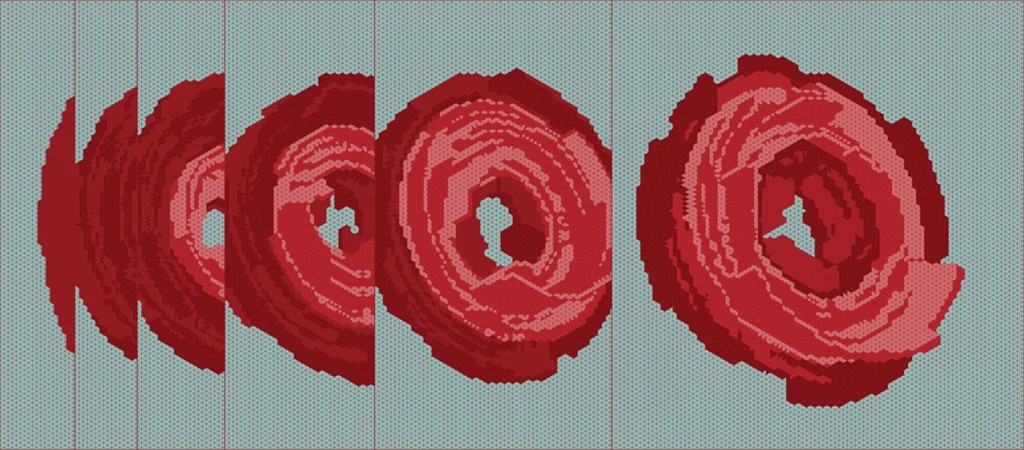
20 GOTO 10 REMP SP#1.
Screen print on paper (digital mock-up). 54cm x 111cm

20 GOTO 10 REMP SP#2.
Screen print on paper (digital mock-up). 48 x 23 cm / 18.75 x 9 in
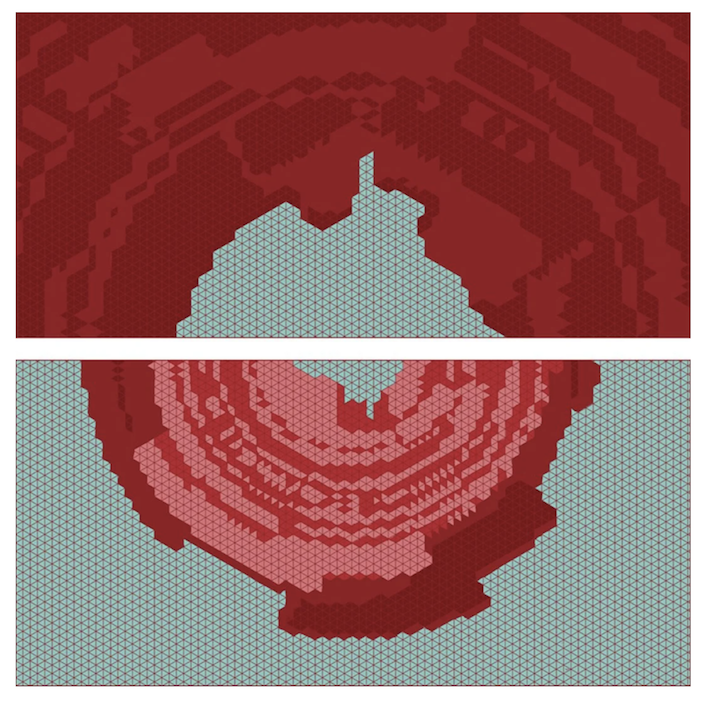
20 GOTO 10 REMP SP#3.
Screen print on paper (digital mock-up). 38 x 38 cm / 15 x 15 in
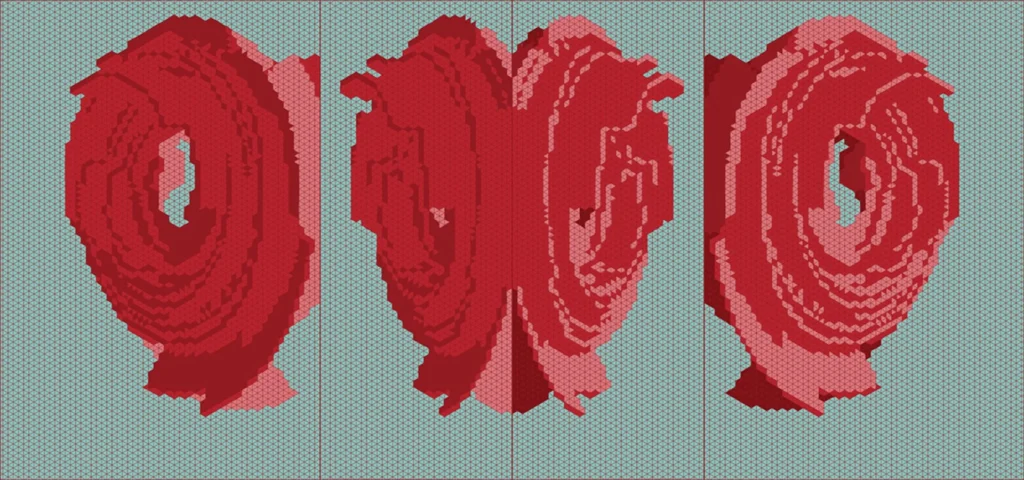
20 GOTO 10 REMP SP#4.
Screen print on paper (digital mock-up). 47.5cm x 90.5cm

20 GOTO 10 REM SP#5.
Screen print on paper (digital mock-up). 76 x 38 cm / 30 x 15 in.
Co-creating the prints
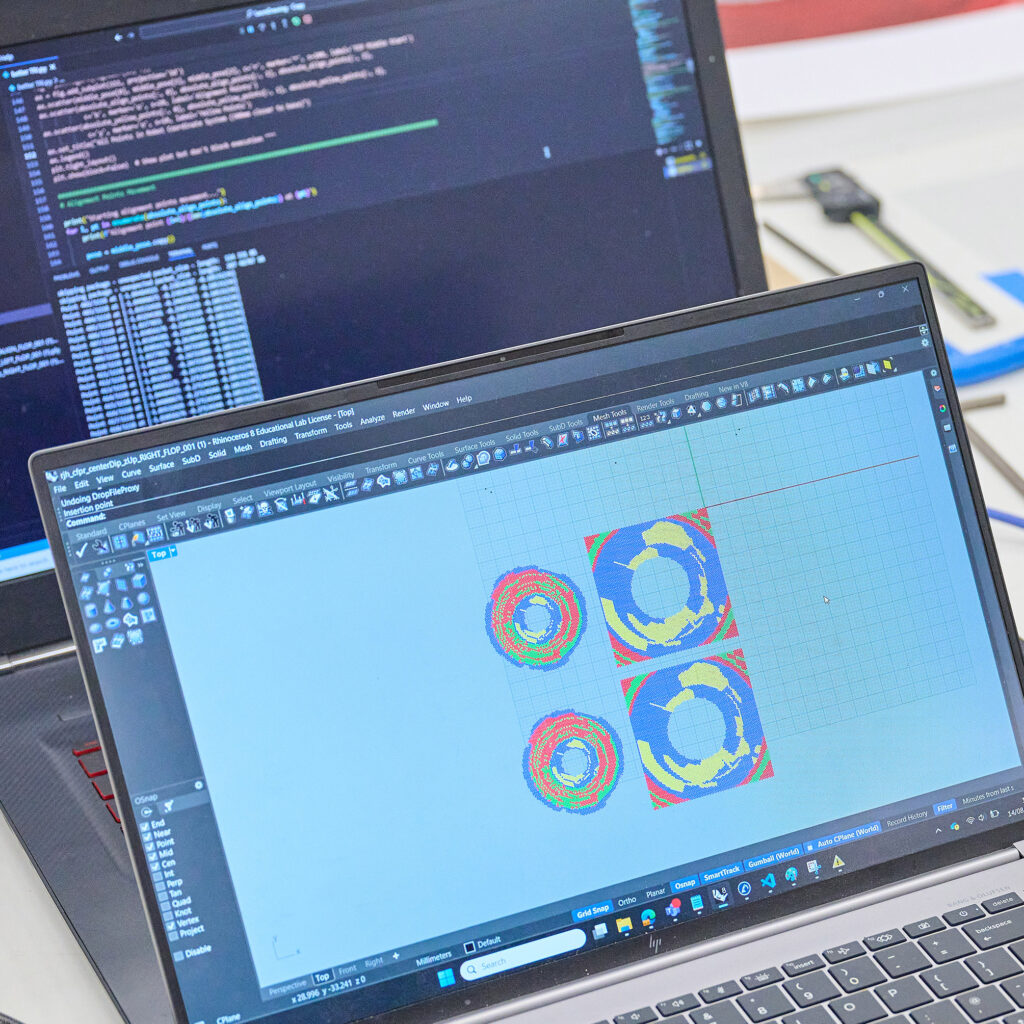
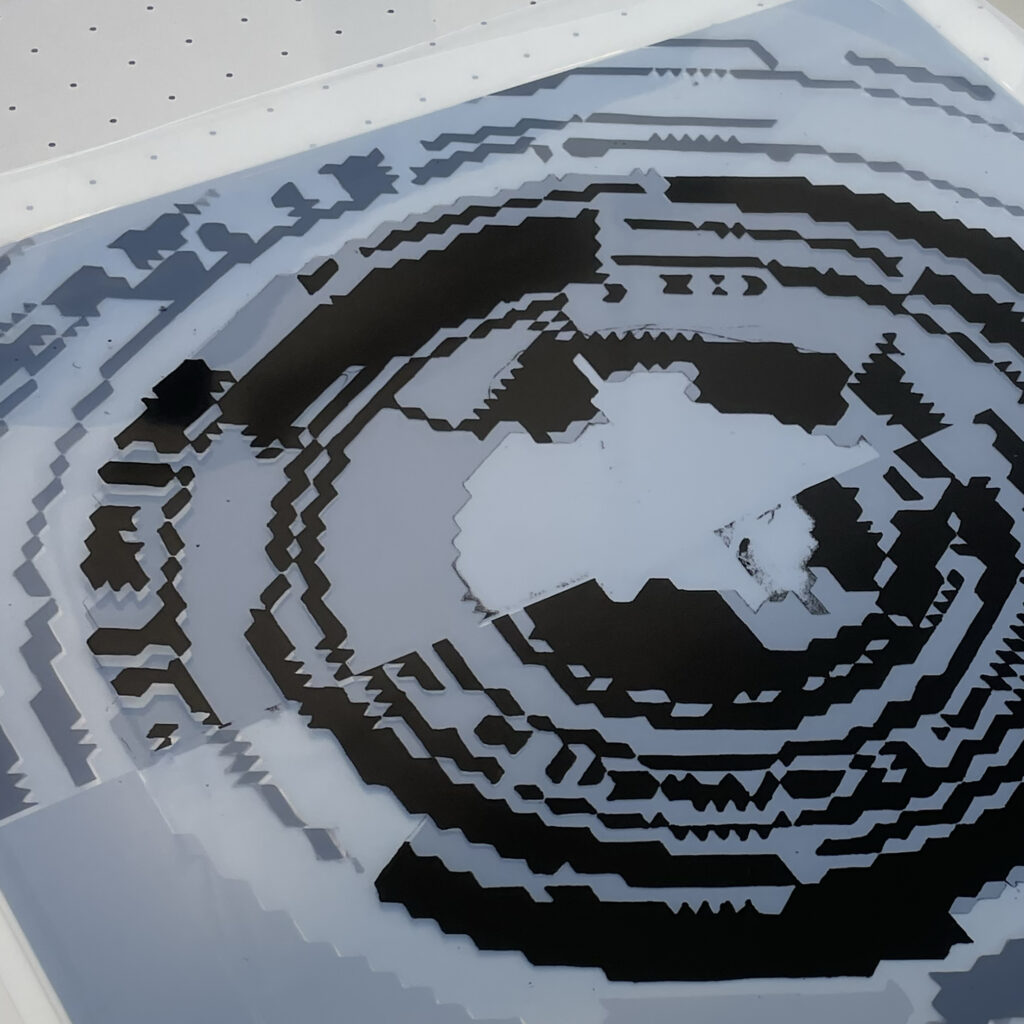
20 GOTO 10 REM SP* was created in collaboration with Nathan Churchill and James Knight who created the robot tool paths, and Laura Clarke who screen printed the stencils made from the robot drawings.
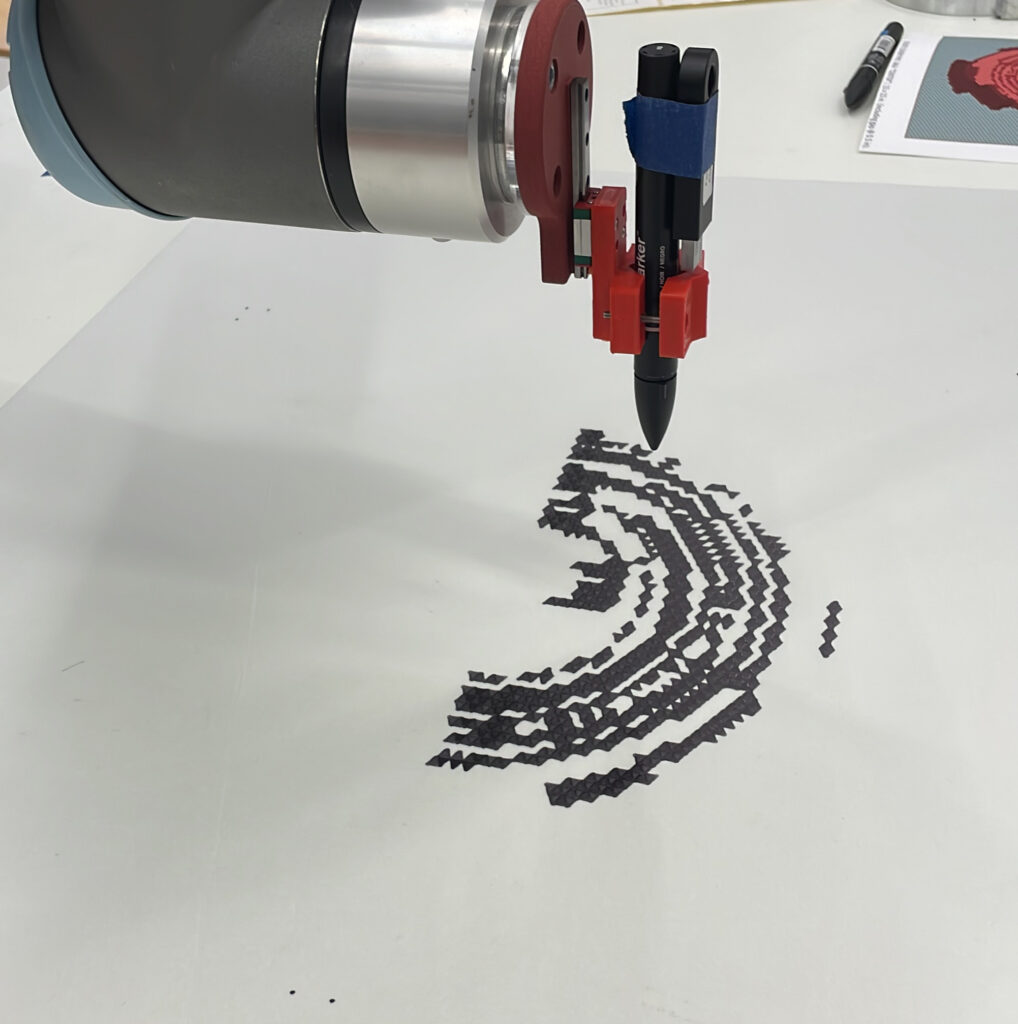
The stencils for this series were drawn by a robotic arm using a fibre-nib pen. As Healy explains, “The process focuses attention on the hand of the artist. One might expect the robot to produce a perfect facsimile, but variations in nib pressure, paper bleed, and device misalignment introduce idiosyncrasies. Contradicting the notion of quantisation, the machine has a calligraphy all of its own.”
For a more detailed explanation about 20 GOTO 10 REM SP*