

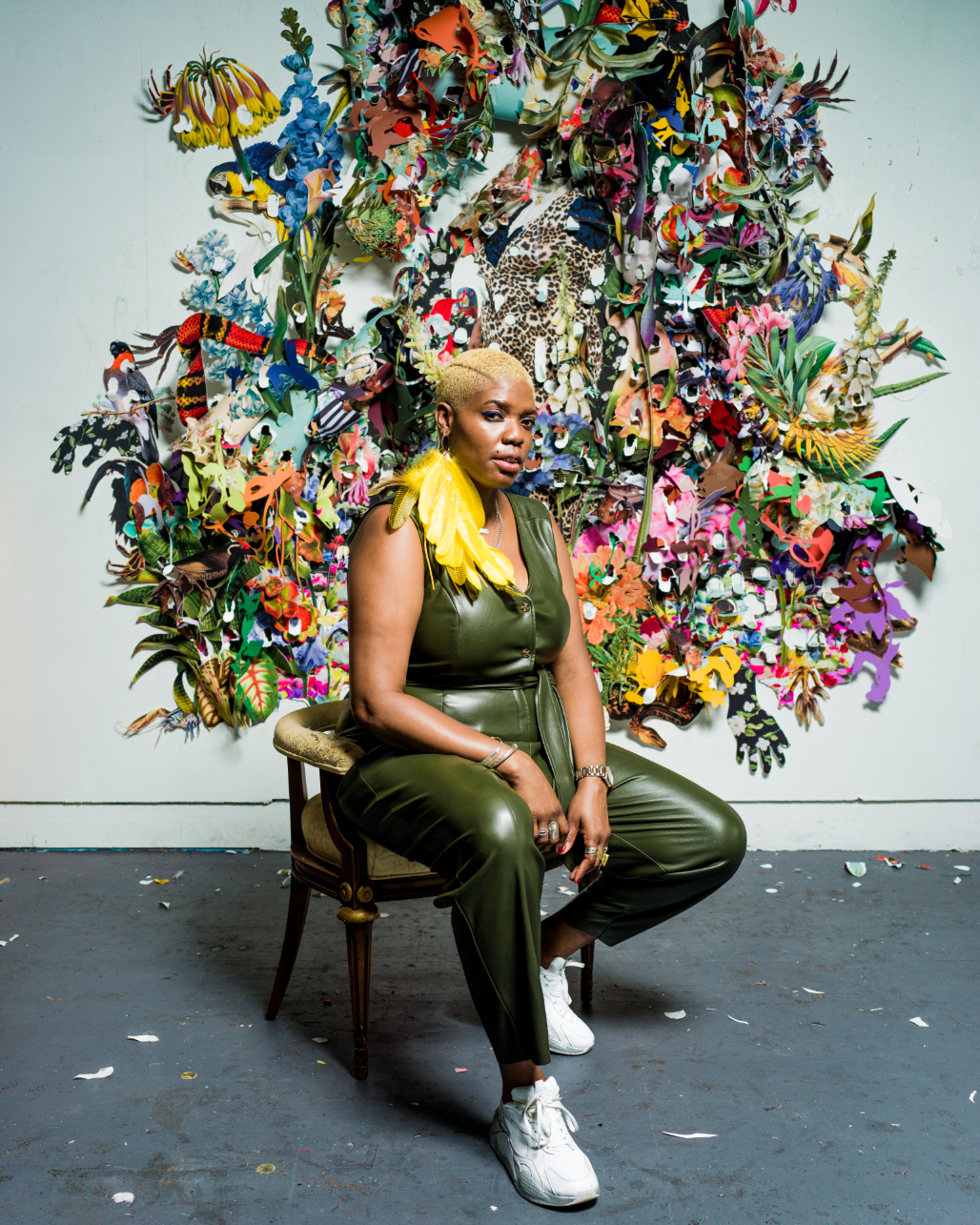
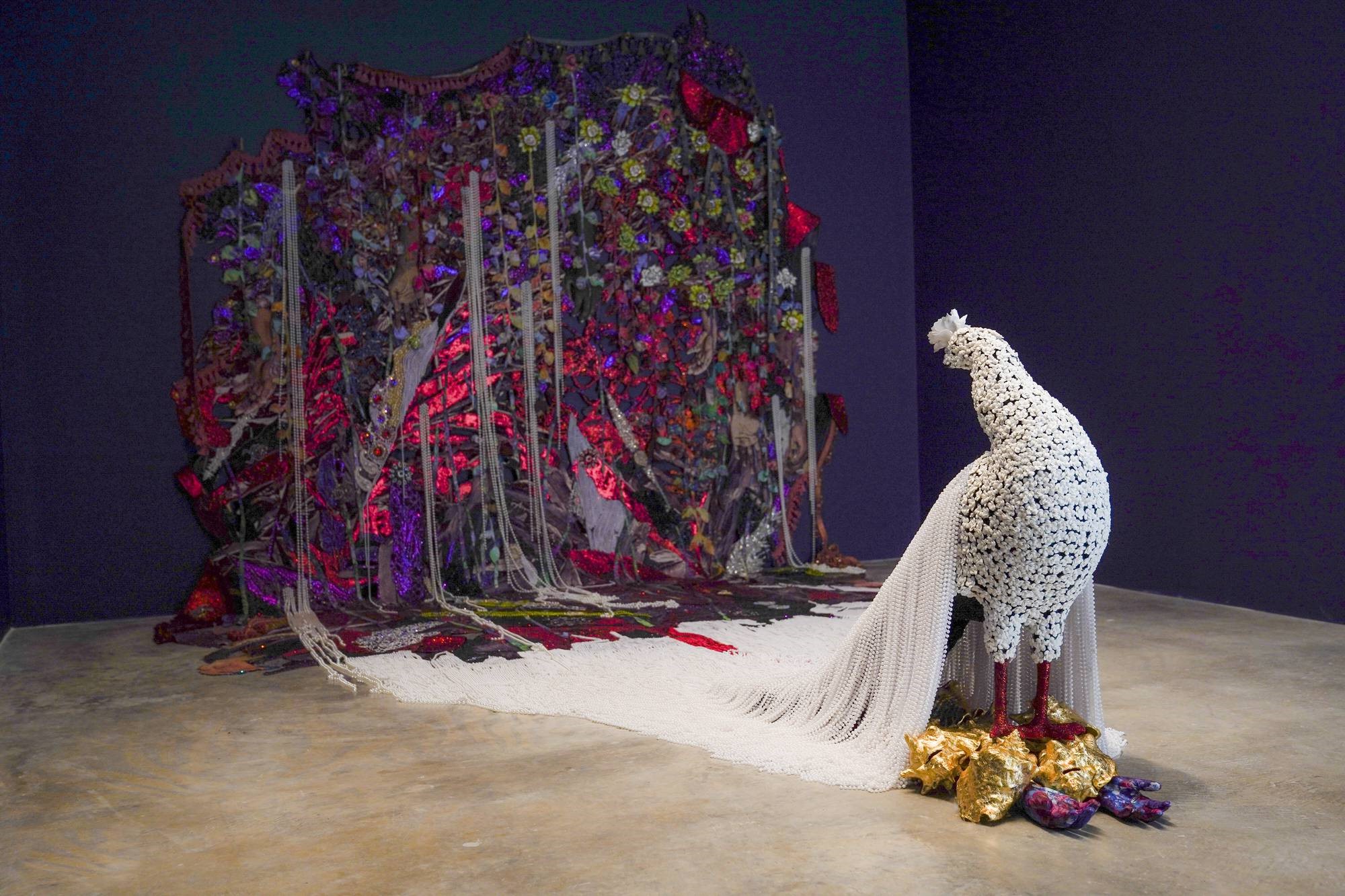
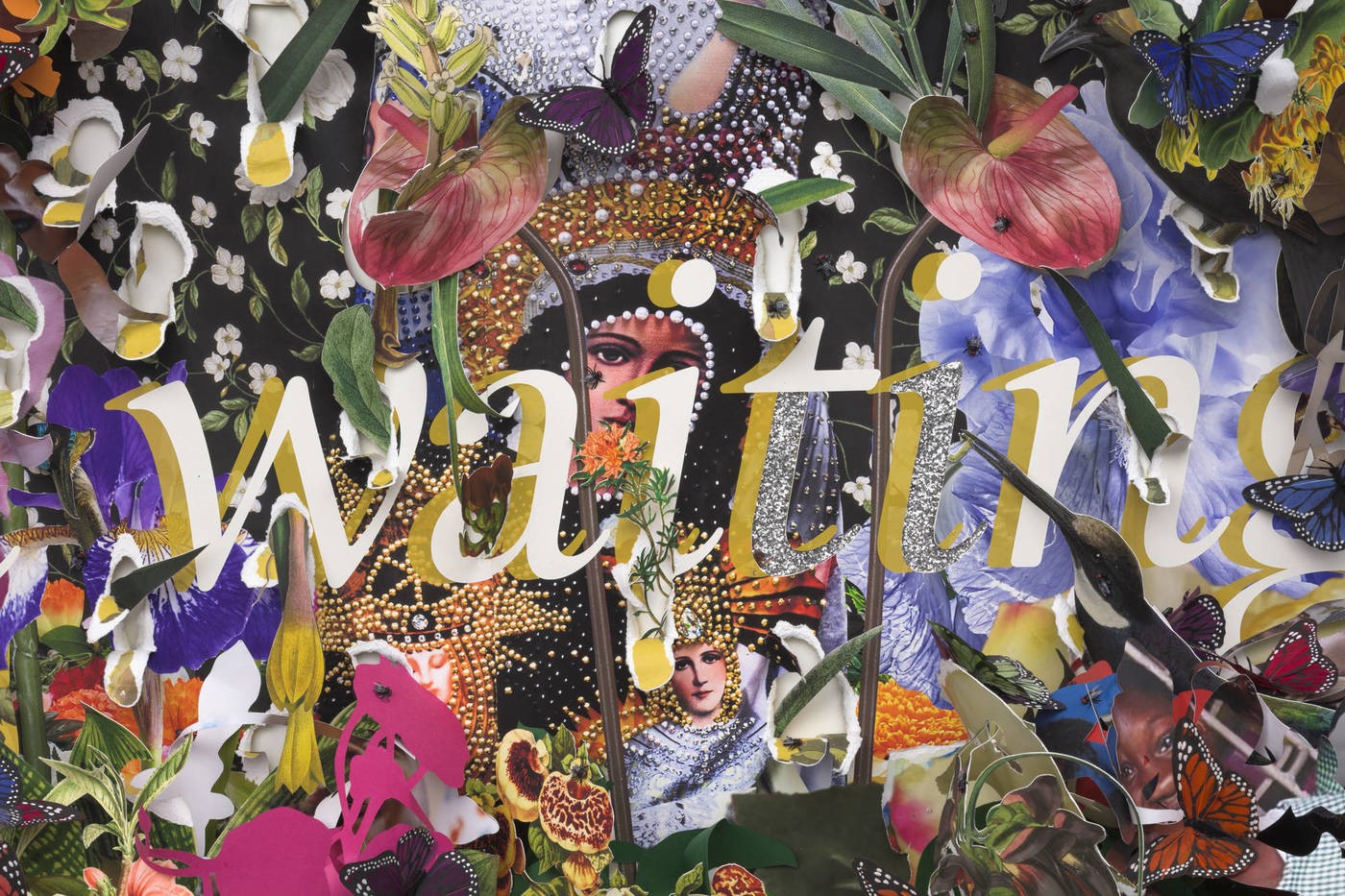
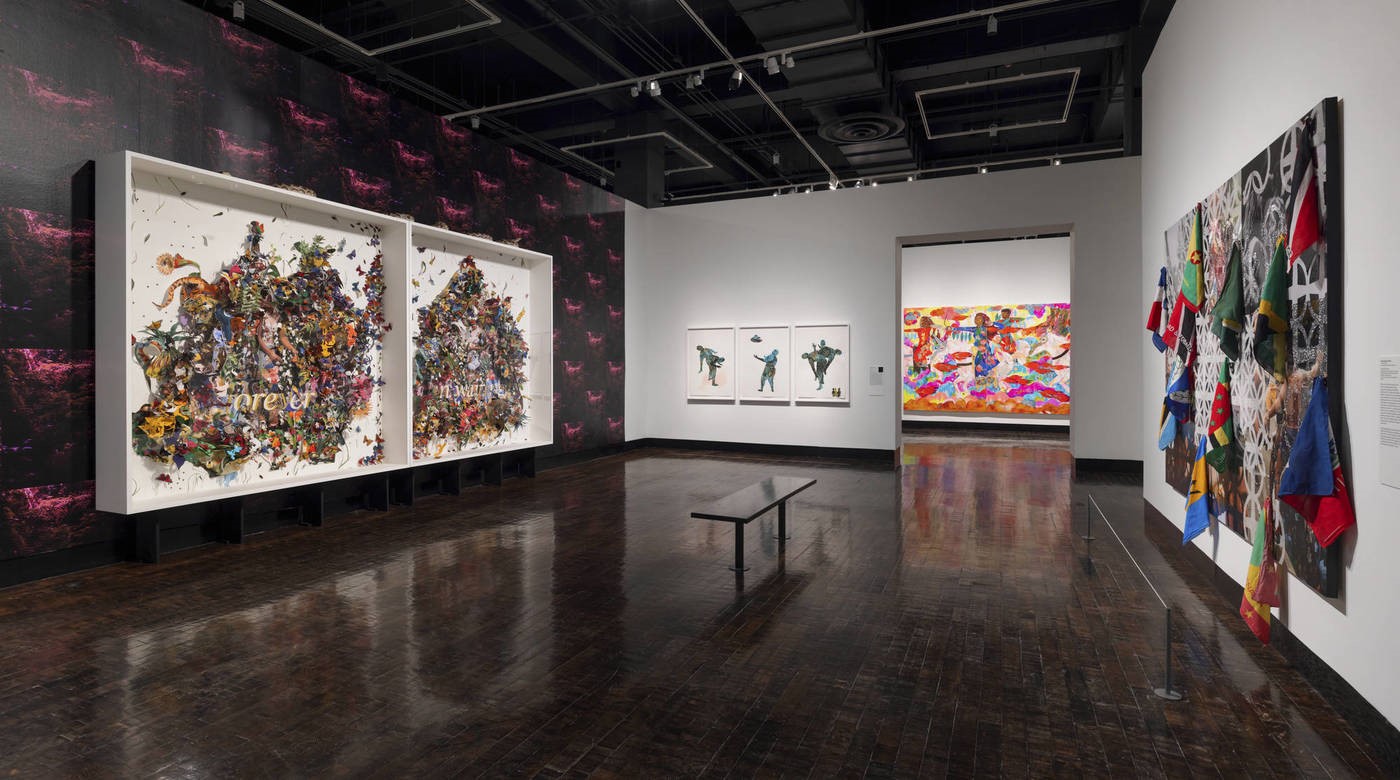
Ebony G. Patterson’s expansive practice addresses visibility and invisibility, through explorations of class, race, gender, youth culture, pageantry and acts of violence in the context of “postcolonial” spaces. With the strong sensibility of a painter, Patterson works across multiple media – including tapestry, photography, video, sculpture, drawing and installation – united by her consistent visual language and intention. Each work is intricately embellished and densely layered, in order to draw the viewer closer and to question how we engage in the act of looking. Patterson states: “I aim to elevate those who have been deemed invisible/un-visible as a result of inherited colonial social structures, by incorporating their words, thoughts, dress, and pageantry as a tactic to memorialize them. It is a way to say: I am here, and you cannot deny me.” Entrancing and colorful, Patterson’s works command the viewer to look beyond their rich formal characteristics and to acknowledge the realities of social injustice. Using the paradoxical to convey important messages, she draws on far reaching vernaculars of art history, religious imagery and popular culture. Patterson explains that she uses beauty to trap the viewer ‘physically, psychologically and emotionally’ in intricate and seducing compositions. Shrouding figures almost completely, the artist creates a presence of bodies no longer there, which raises pertinent questions about those who are not visible.
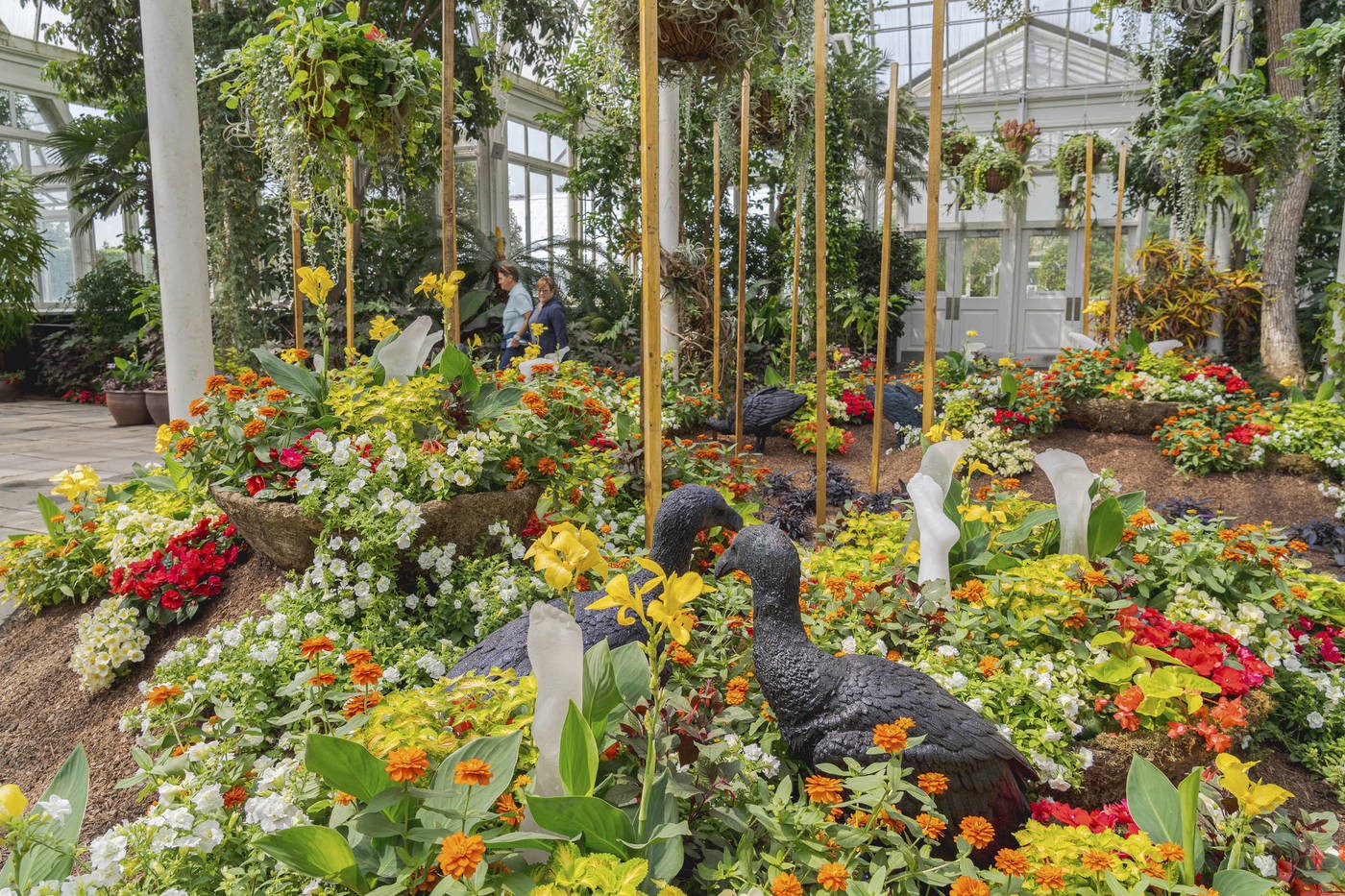
Since 2013, the idea of the garden, both real and imagined, has formed an essential arc of Patterson’s practice. Framing the garden as an active site of power, Patterson explores it as a metaphor for “postcolonial” space and an extension of the body. “I am interested in how gardens – natural but cultivated settings – operate with social demarcations. I investigate their relationship to beauty, dress, class, race, the body, land and death.” (Patterson, 2018). In new works, Patterson continues to deftly combine splendor with danger. Juxtaposing visibility and invisibility; death and survival, Patterson’s works remain filled with an overwhelming sense of hope. People become memorialized in Patterson’s gardens – each piece is a marker for bodies overlooked. Life fervently continues, and those who live in the garden persist in finding ways to survive.
During her residency with the CFPR in March 2024, Patterson was interested in furthering her research and considerations around the garden as a metaphor for post colonial space. The garden is evidence of conquest and colonialism. As plants were made to move so were bodies. Patterson is interested in the ways the garden is an embellishment that conceals the on going histories, because of its beauty. The language of botany (and ornathology) has always had a language that is easily applicable to the social negotiations of (post) colonial spaces.
In October 2024 Patterson was awarded a MacArthur Foundation Fellowship. The foundation award fellowships to talented individuals who have shown extraordinary originality and dedication in their creative pursuits and a marked capacity for self-direction.

#ebonygpatterson
@moniquemeloche
@halesgallery
